
How to Calculate the Number of Bars in Footing
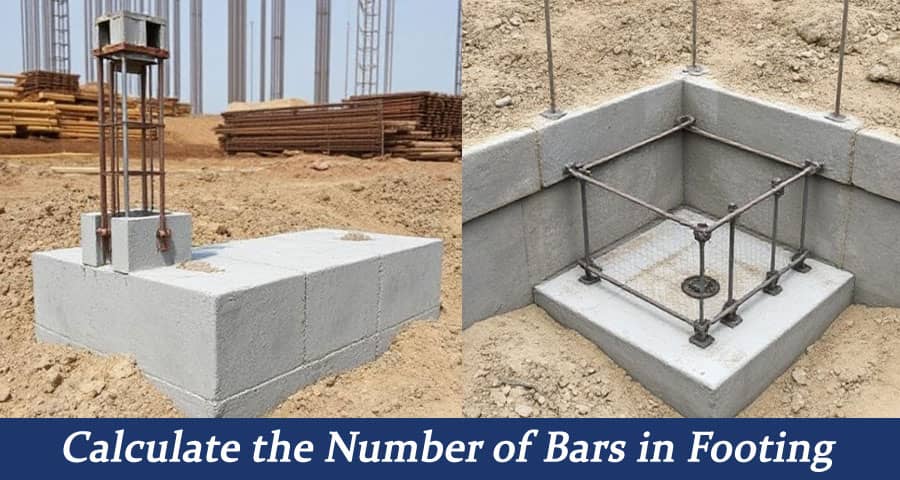
Footing is a crucial structural element in any construction project, designed to evenly distribute loads from the structure to the soil. Reinforcement bars (rebars) play a significant role in enhancing the strength and durability of footings. Accurate calculation of the number of bars in footing is essential to ensure structural integrity, cost efficiency, and compliance with engineering standards. In this article, we will provide a detailed step-by-step guide on how to determine the number of rebars required for footing.
Understanding the Types of Footings
Before calculating the number of bars, it is essential to identify the type of footing. Common types include:
- Isolated Footing - Supports single columns and is commonly square or rectangular in shape.
- Combined Footing - Supports two or more columns when the columns are closely spaced.
- Raft (Mat) Footing - Covers the entire structure and distributes the load over a larger area.
- Strip Footing - A continuous footing that supports a row of columns or walls.
Each footing type requires a specific reinforcement arrangement, affecting the number of rebars used.
Key Parameters for Bar Calculation
To determine the number of rebars in footing, the following parameters must be considered:
- Footing Dimensions (Length, Width, and Depth)
- Spacing of Bars (as per design specifications)
- Cover Requirements (clear cover for durability and protection)
- Bar Diameter (typically 10mm, 12mm, 16mm, etc.)
- Steel Reinforcement Plan (provided in structural drawings)
Step-by-Step Calculation of the Number of Bars in Footing
1. Determine the Reinforcement Layout
In most cases, rebars are placed in a grid pattern both in the longitudinal and transverse directions. The layout depends on the structural design and footing type.
2. Calculate the Number of Bars in One Direction
The formula for calculating the number of bars in one direction (X or Y) is:
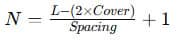
- N = Number of bars required
- L = Length of footing in the respective direction
- Cover = Clear cover from the edge of the footing
- Spacing = Center-to-center distance between rebars
For example, if the footing length is 2m, clear cover is 50mm (0.05m), and bar spacing is 150mm (0.15m):

(Round up to the next whole number)
3. Repeat for the Perpendicular Direction
The same formula applies for the perpendicular direction (Y-axis). If the width of the footing is 1.5m, clear cover remains 50mm, and bar spacing is 150mm:

4. Calculate the Total Number of Bars
The total number of rebars required for the footing is obtained by summing the rebars in both directions:

5. Determine the Total Length of Bars
To find the total length of bars required:

Where:
- L_total = Total length of bars
- N = Number of bars
- L_individual = Length of each bar, considering overlaps and bends

If each bar length is 2m (for X direction) and 1.5m (for Y direction), total steel required is:
6. Consider Lapping and Wastage
For practical implementation, extra length is needed for lapping, bending, and wastage. Typically, 5-10% additional steel is considered.
For a 10% increase:
Additional Steel = 44.5 x 1.10 = 48.95
Thus, approximately 49m of rebar is required.
Example Calculation Summary
- Footing Dimensions: 2m x 1.5m x 0.5m
- Clear Cover: 50mm
- Bar Spacing: 150mm
- Total Bars: 25
- Total Steel Required: 49m (including wastage)
Conclusion
Calculating the number of bars in footing is a critical step in structural design. By following the correct methodology, engineers and contractors can ensure that sufficient reinforcement is provided while optimizing material costs. Always refer to design specifications and structural drawings to confirm calculations, and consider safety margins for better performance.