
Importance of Innovative Materials in Modern Roofing Solutions
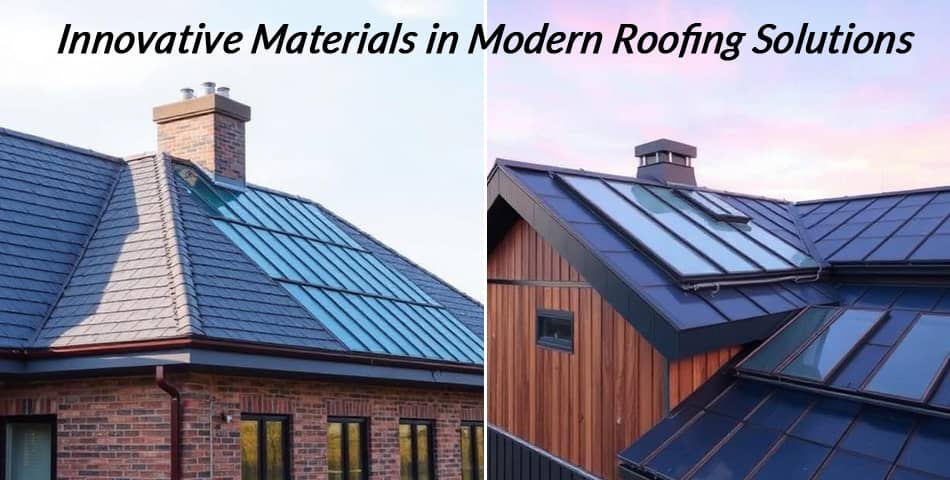
Roofing is no longer limited to providing basic protection from rain, wind, sunlight, and other environmental conditions. As buildings become more energy-efficient, sustainable, durable, and technologically advanced, the demand for innovative roofing materials continues to grow. Modern roofing solutions combine advanced materials, improved manufacturing techniques, better insulation, and sustainable design principles to create roofs that perform efficiently throughout their service life.
The selection of roofing materials has a direct impact on a building's energy consumption, durability, maintenance requirements, environmental performance, comfort, and overall construction cost. Innovative materials allow architects, engineers, contractors, and building owners to address these requirements while creating roofing systems that are better suited to changing climate conditions and modern construction standards.
What Are Innovative Roofing Materials?
Innovative roofing materials are advanced products or material systems developed to improve the performance, efficiency, sustainability, or functionality of conventional roofs.
These materials may incorporate improved:
- Thermal performance
- Water resistance
- Weather resistance
- Fire performance
- Durability
- Energy efficiency
- Recyclability
- Installation efficiency
- Maintenance characteristics
Examples include cool roofing materials, synthetic roofing membranes, advanced metal roofing systems, recycled roofing products, solar-integrated roofing materials, reflective coatings, high-performance insulation, and lightweight composite roofing products.
The objective is not simply to replace traditional materials but to develop roofing systems that provide better performance throughout the building's life cycle.
Growing Importance of Advanced Roofing Solutions
Modern buildings face increasingly demanding performance requirements. A roof must withstand changing weather conditions while contributing to the overall efficiency of the building.
Traditional roofing systems can still be highly effective when properly designed and installed, but innovative materials provide additional opportunities to improve performance.
Modern roofing materials can help us address challenges such as:
- Increasing energy requirements
- Urban heat accumulation
- Heavy rainfall
- Strong winds
- Temperature fluctuations
- Material waste
- Rising maintenance costs
- Sustainability requirements
- Building energy-efficiency targets
This makes innovative roofing technology an increasingly important component of contemporary construction.
Improved Energy Efficiency
One of the major advantages of innovative roofing materials is their potential to improve building energy efficiency.
Roof surfaces receive significant solar radiation. Conventional dark-colored roofing materials can absorb substantial amounts of solar energy, increasing roof temperatures and potentially increasing cooling requirements inside the building.
Reflective roofing materials, commonly associated with cool-roof strategies, can reflect a greater portion of incoming solar radiation and reduce heat absorption.
Similarly, advanced insulation materials can reduce unwanted heat transfer through the roof assembly.
A well-designed roofing system can therefore contribute to:
- Lower cooling demand
- Improved indoor thermal comfort
- Reduced heat transfer
- Better building energy performance
- More stable indoor temperatures
The actual energy savings depend on factors such as climate, building orientation, insulation levels, HVAC systems, roof design, and occupancy.
Enhanced Thermal Insulation
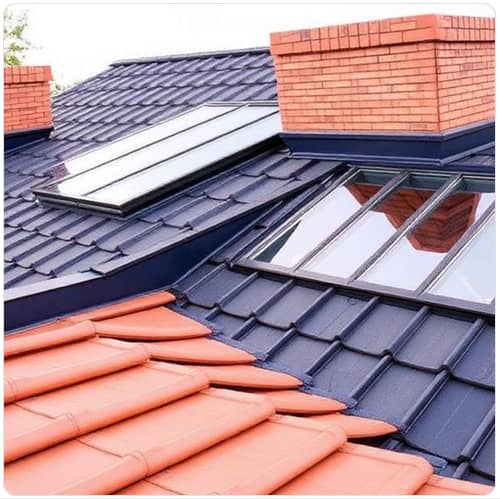
Innovative roofing systems increasingly incorporate high-performance insulation materials.
Insulation reduces heat flow between the interior and exterior of a building. Depending on the climate and roof assembly, appropriate insulation can help reduce heat gain during hot weather and heat loss during colder conditions.
Advanced insulation products may provide high thermal resistance while requiring comparatively less thickness than some conventional alternatives.
When insulation, vapor control, ventilation, waterproofing, and roofing membranes are designed as an integrated system, the roof can contribute significantly to overall building performance.
Better Durability and Weather Resistance
A roof is continuously exposed to environmental conditions. Rain, ultraviolet radiation, wind, temperature changes, moisture, and mechanical stresses can gradually degrade roofing materials.
Innovative materials are increasingly engineered to provide improved resistance to these factors.
For example, advanced membranes and coatings may provide enhanced:
- UV resistance
- Waterproofing
- Flexibility
- Temperature resistance
- Puncture resistance
- Weathering performance
Greater durability can potentially extend the useful service life of the roof and reduce the frequency of repairs and replacement.
However, material quality alone does not guarantee long-term performance. Correct design, installation, detailing, drainage, and maintenance remain essential.
Sustainable Roofing Materials
Sustainability has become a major consideration in modern construction.
Innovative roofing products can support sustainable building strategies through the use of:
- Recycled materials
- Recyclable components
- Long-life products
- Low-waste manufacturing
- Locally available materials
- Materials with lower embodied impacts
- Reusable or recoverable components
For example, roofing products manufactured with recycled content can help reduce dependence on virgin raw materials.
Similarly, durable roofing systems can reduce the environmental impacts associated with frequent replacement.
When evaluating sustainability, we should consider the entire life cycle of the roofing system, including raw material extraction, manufacturing, transportation, installation, maintenance, replacement, and end-of-life management.
Lightweight Roofing Materials
Weight is another important consideration in modern roof design.
Innovative composite materials and lightweight roofing products can reduce the dead load imposed on the structural system.
Lightweight systems may be particularly useful for:
- Renovation projects
- Roof replacements
- Modular construction
- Prefabricated buildings
- Structures where additional loading is restricted
Reducing roof weight can sometimes simplify structural requirements and transportation. However, structural engineers must verify the complete roof system, including wind uplift, connections, fire performance, drainage, and other design requirements.
Solar-Integrated Roofing Systems
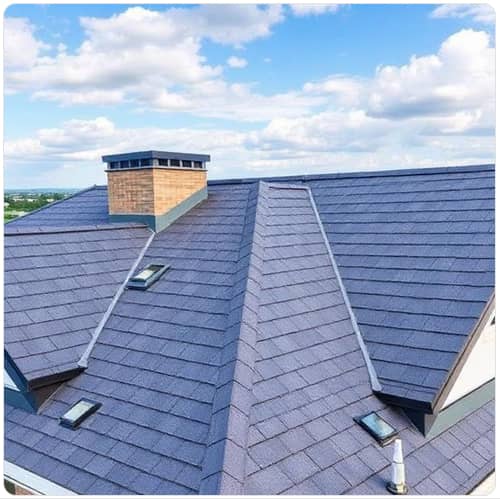
The integration of renewable energy technologies with roofing is another major development.
Traditional solar panels are usually installed above the roof surface. Newer approaches integrate photovoltaic technology more closely with roofing systems.
Building-integrated photovoltaics (BIPV) can combine energy generation with building-envelope functions.
Solar-integrated roofing solutions can potentially:
- Generate renewable electricity
- Utilize otherwise unused roof areas
- Improve building energy performance
- Support sustainability objectives
- Reduce dependence on grid electricity
The suitability of solar roofing depends on factors such as solar exposure, roof orientation, shading, structural capacity, electrical requirements, climate, and project economics.
Cool Roof Technology
Cool roofs are designed to reflect more sunlight and absorb less solar heat than conventional roofs.
Innovative cool-roof materials may include:
- Reflective membranes
- Reflective coatings
- Light-colored roofing materials
- Specially engineered surface treatments
Cool roofing can be particularly beneficial in hot and sunny climates, where reducing solar heat gain can contribute to lower cooling requirements.
In urban environments, widespread adoption of reflective roofing can also contribute to reducing surface temperatures.
Advanced Waterproofing Membranes
Water infiltration is one of the most common causes of roofing problems. Modern waterproofing technologies have therefore become an important area of innovation.
Advanced roofing membranes can be manufactured using materials such as:
- Polymer-modified compounds
- Synthetic polymers
- Thermoplastic materials
- Elastomeric materials
Depending on the system, these membranes may provide improved flexibility, waterproofing, chemical resistance, and resistance to environmental exposure.
Proper detailing at joints, penetrations, roof edges, drains, parapets, and transitions remains essential for successful waterproofing.
Green Roofing Systems
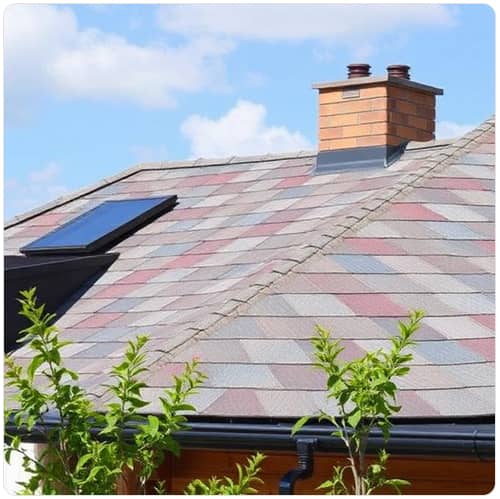
Green roofs incorporate vegetation and growing media over a waterproofed roof assembly.
A typical green roof may contain:
- Structural roof deck
- Waterproofing layer
- Root barrier
- Drainage layer
- Filter layer
- Growing medium
- Vegetation
Green roofs can provide several potential benefits, including:
- Stormwater management
- Thermal performance improvements
- Habitat creation
- Increased roof surface biodiversity
- Improved urban environmental conditions
The additional weight of saturated growing media must be considered during structural design.
Recycled and Reclaimed Roofing Products
The construction industry generates significant quantities of material waste. Innovative roofing products can help support circular approaches to construction.
Examples include roofing products manufactured using recycled:
- Plastics
- Rubber
- Metals
- Glass
- Mineral materials
Using recycled content can reduce the demand for virgin resources, although environmental performance should be evaluated using reliable product data rather than assumptions based solely on recycled content.
Advanced Metal Roofing
Metal roofing has evolved significantly through improvements in coatings, profiles, fastening systems, and manufacturing.
Modern metal roofs can provide:
- Long service life
- Low maintenance requirements
- High recyclability
- Lightweight construction
- Resistance to many weather conditions
- Architectural flexibility
Protective coatings can improve resistance to corrosion and weathering, while modern profiles can improve drainage and structural performance.
Metal roofing can therefore be an effective option for both commercial and residential applications when properly specified.
Smart Roofing Technologies
The concept of a smart building is also influencing roofing design.
Emerging roofing systems may incorporate technologies such as:
- Temperature sensors
- Moisture sensors
- Leak detection systems
- Solar monitoring
- Remote condition monitoring
- Automated building-management integration
These technologies can help building owners identify potential problems before they develop into major failures.
For large commercial buildings, data-driven roof monitoring can potentially improve maintenance planning and reduce unexpected repair requirements.
Reduced Maintenance Requirements
Roof maintenance can become expensive when materials deteriorate rapidly or defects remain undetected.
Innovative materials can contribute to lower maintenance requirements through improved resistance to:
- Cracking
- Corrosion
- UV exposure
- Moisture
- Thermal movement
- Biological growth
Nevertheless, even advanced roofing systems require inspection and maintenance. Drainage systems, flashings, penetrations, joints, coatings, and roof surfaces should be periodically inspected according to the manufacturer's recommendations and project requirements.
Improved Installation Efficiency
Construction schedules increasingly demand faster and more predictable installation.
Prefabricated and modular roofing components can reduce on-site work and improve installation consistency.
Some modern systems are designed for:
- Faster installation
- Reduced material handling
- Less on-site waste
- Simplified connections
- Improved dimensional consistency
Factory-controlled manufacturing can also improve product uniformity compared with systems that require extensive on-site fabrication.
Role of Innovative Roofing Materials in Climate-Resilient Construction
Climate resilience is becoming increasingly important in building design.
Roofing materials must be selected according to the environmental conditions expected at the project location.
Depending on the region, designers may need to consider:
- Extreme heat
- Intense rainfall
- High winds
- Hail
- Snow
- Humidity
- Freeze-thaw cycles
- Ultraviolet exposure
Innovative materials can provide additional performance options, but they should always be selected based on local climate, building requirements, applicable codes, manufacturer specifications, and engineering analysis.
Choosing the Right Innovative Roofing Material
There is no single roofing material that is ideal for every building.
We should evaluate a roofing system based on several factors:
Climate
The local climate determines the required resistance to heat, moisture, wind, temperature changes, and other environmental conditions.
Building Type
Residential buildings, warehouses, factories, offices, hospitals, schools, and commercial buildings can have very different roofing requirements.
Roof Geometry
Roof slope, drainage arrangements, penetrations, parapets, and structural configuration influence material selection.
Initial Cost
Advanced materials can have higher upfront costs than conventional products. However, the initial price should not be considered in isolation.
Life-Cycle Cost
Maintenance, energy performance, repair frequency, replacement requirements, and service life can significantly affect the total cost of ownership.
Environmental Performance
We should consider recycled content, durability, recyclability, embodied impacts, and disposal requirements when sustainability is a project objective.
Installation Requirements
Some advanced materials require specialized tools, trained installers, or specific substrate preparation.
Future of Innovative Roofing Materials
The future of roofing is likely to involve greater integration between materials science, renewable energy, digital monitoring, sustainability, and building performance.
Research and development are expected to continue focusing on:
- More durable membranes
- Higher-performance insulation
- Recyclable roofing systems
- Solar-integrated materials
- Self-monitoring roof systems
- Reflective and adaptive surfaces
- Low-carbon materials
- Lightweight composites
- Circular construction solutions
As building performance requirements continue to evolve, roofing will increasingly be treated as an active component of the building envelope rather than simply a protective covering.
Conclusion
Innovative materials are transforming modern roofing solutions by improving energy efficiency, durability, sustainability, waterproofing, installation efficiency, and overall building performance. From reflective roofing and advanced insulation to solar-integrated systems, recycled materials, green roofs, and smart monitoring technologies, modern roofing offers a wider range of solutions than ever before.
The most effective approach is to select roofing materials based on the specific building, climate, structural requirements, maintenance strategy, budget, environmental objectives, and expected service life.
By combining innovative materials with sound engineering, proper installation, effective drainage, appropriate detailing, and regular maintenance, we can create roofing systems that are more durable, efficient, sustainable, and resilient for modern construction.